固体物理(二)Sommerfeld theory
Drude model + Fermi-Dirac statistics = Sommerfeld free e- model
Drude-Sommerfeld Model
$$ \begin{array} ff_{MB}({\varepsilon})=\frac{1}{e^{\frac{{\varepsilon}-{\mu}}{k_BT}}} \\ {\mu}—Chemical \ potential \ in \ J(or \ eV) \\ 𝑘_B–Boltzmann’s \ constant \ 1.38\times10^{-23} J/K \\ 𝑇 – Absolute \ temperature \ in \ K \end{array} $$
- Paul Drude proposed his free-electron-gas model in 1900, before the Quantum Mechanics theory is developed. Thus his model is fully based on classical physics. In particular, Drude used Maxwell–Boltzmann (M-B) statistics for the free e- gas, which is for non-interacting particles and is the only available model at that time.
$$ \begin{array} ff_{FD}({\varepsilon})=\frac{1}{e^{\frac{{\varepsilon}-{\mu}}{k_BT}}+1} \\ if \ e^{\frac{{\varepsilon}-{\mu}}{k_BT}}\gg 1 \implies e^{-\frac{{\varepsilon}-{\mu}}{k_BT}} \ (for \ high \ energy \ E \ or \ low \ particle \ density) \end{array} $$
- In 1925, Wolfgang Pauli formulated the Pauli exclusion principle: There can be no more than one e-(fermion) occupying any single quantum state/level (defined by the four quantum numbers n, l, ml, ms). It is one of the fundamental principle in Quantum Mechanics. – so e-s are interacting with each other!
- Pauli exclusion principle leads to Fermi-Dirac (F-D) statistics in Quantum Mechanics, developed independently by Enrico Fermi and Paul Dirac in 1926. In 1927, Arnold Sommerfeld replaced M-B with F-D statistics to develop a semi-classical theory with better predictions than the Drude model.
Fermi-Dirac (F-D) Distribution


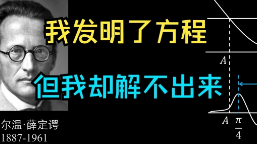
However, according to the Quantum mechanics, it is impractical to solve the many-particle Schrödinger equation with such a complexity – Approximation is need to predict the property of solid!

Ground states (T = 0 K) of Sommerfeld’s free e- gas: Fermi energy, bulk modulus
Sommerfeld’s quantum free e- gas

Ground state properties (T = 0 K)

Total ground-state energy (T = 0 K)
We know how to derive all the Fermi parameters for the ground-state free e- gas, now let’s derive the total ground-state energy E, by adding up the energies of all the states/k-points inside the Fermi sphere:

Excited states (T > 0 K) of Sommerfeld’s free e- gas: electronic specific heat
Excited-state Energy (T > 0 K)
For the non-ground states or excited states at T > 0 K, the Fermi-Dirac distribution has to be explicitly applied for each energy level: $ f_{FD}({\varepsilon})=\frac{1}{e^{\frac{{\varepsilon}-{\mu}}{k_BT}}+1} $

Density of states (DOS) of free e- gas

Specific heat of free e- gas (T > 0 K)
At T > 0 K, $E=2\sum_{\mathbf{k}} {\varepsilon}(\mathbf{k})f_{FD}({\varepsilon}(\mathbf{k}))=\frac{V}{4\pi^3}\int_\mathbf{k}{\varepsilon}(\mathbf{k})f_{FD}({\varepsilon}(\mathbf{k}))d\mathbf{k} = V\int_0^\infty {\varepsilon} f_{FD}({\varepsilon}) g({\varepsilon})d{\varepsilon}$
Detailed integral on this can be complex. But we can still qualitatively analyze the dependence of $E/V$ on $T$ - specific heat $c_v=\frac{C_v}{V}=\left[ \frac{\partial (E/V)}{\partial T} \right]V$ which depends on the variation of $f{FD}({\varepsilon})$ as a function of $T$.
Raising $T$ only increases the energy of e- right below ${\varepsilon}_F({\varepsilon}_F-{\varepsilon} \sim k_BT)$ to above ${\varepsilon}F({\varepsilon}F-{\varepsilon} \sim k_BT)$, and the rest of e- remain unchanged: $E{total}=E{ground}+\triangle E$

Good agreement for alkali and noble metals, but fails for magnetic metals.
Summary of Sommerfeld theory
Success of Sommerfeld theory
By adding some quantum mechanical corrections such as F-D statistics to the Drude model, Sommerfeld’s model shows significant success:
- Better prediction of Bulk modulus $B$ and specific heat $c_v$.
- Fermi velocity $v_F$ gives better estimation of mean free path $l=v_F{\tau}$
- The better specific heat $c_v$ improves the prediction of thermal conductivity and thermopower to the correct order of magnitudes.
DC & AC conductivities / resistivities and Hall coefficients are still the same as the classical Drude model.
Deficiencies of Sommerfeld theory
However, the Sommerfeld theory is still based on the free-e--gas model, which may be good for some metals (alkali), but also show many discrepancies:
- Cannot predict the temperature dependence of Resistivities and Hall coefficients ($R_H=1/nq$).
- The effects of holes as the positive charge carriers are all missing.
- The effects of ions are all missing, such as the cubic term $AT^3$ in specific heat.
Most importantly, the free-e--gas model cannot explain why some materierals are insulating without any free e- .
- Carbon is conducting in the form of graphite, but insulating in the form of diamonds.
Basis of Drude-Sommerfeld theory
Both Drude and Sommerfeld theories are based on free-e--gas model with the following assumptions:
- Independent electron approximation: neglect e--e- interactions (Good)
- Free electron approximation: neglect e--ion interactions (Not so Good)
- Motion of free electrons follows classical Newton’s laws: Electrons move in straight lines until being interrupted by collisions
- Relaxation time: an electron experiences a collision with a probability per unit time 1/τ (known as relaxation time or mean free time), which is taken to be independent of an electron's position and velocity.
Sommerfeld added quantum mechanical F-D statistics, which is a significant correction, but still not enough.
e- in solid is not free! So the next improvement is to remove the Free electron approximation by including the effects of ions:
- The motion of e- is affected by ionic potential. (Chap 4)
- Vibration of ions is the source of free-e- collision. (Chap 5)